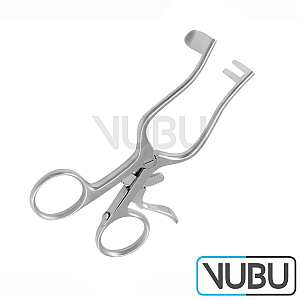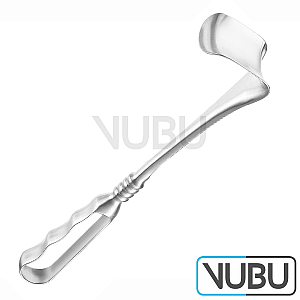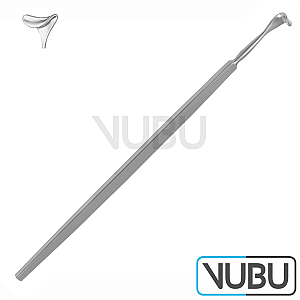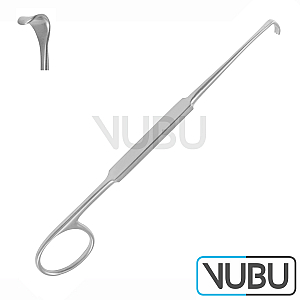


Fine-Toothed Retractor for Optimized Grip in Bony Procedures in Spinal, Foot and Hand Surgery
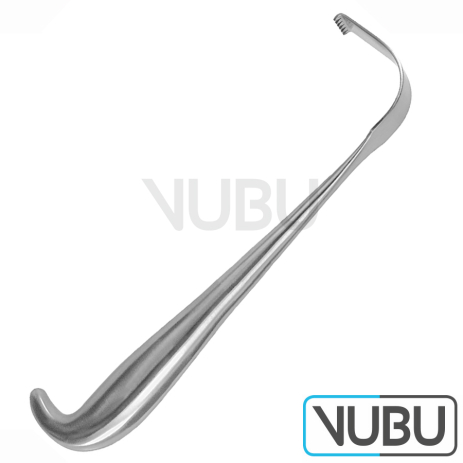
The MEYERDING RETRACTOR Type FIG-1 (50 mm x 16 mm / 22.5 cm) is a Class I medical device manufactured according to ISO 13485:2016. This special, fine-toothed retractor is designed for the secure and slip-resistant retraction of soft tissues from bony structures. The precisely arranged fine teeth ensure a firm grip without excessively traumatizing the tissue and are ideal for precise approaches in orthopedics and traumatology.
Product Highlights:
✔ Manufactured in accordance with ISO 13485:2016
✔ CE Marked – Class I (Regulation (EU) 2017/745 – MDR)
✔ Fine-toothed blade (FIG-1 Type) for secure grip on periosteal or ligamentous tissue
✔ Compact, wide blade shape (50 mm x 16 mm) for stable retraction of medium soft tissue areas
✔ Short, precise overall length of 22.5 cm for optimal control in confined operative fields
✔ High-quality, hardened surgical stainless steel for durability and sharp tooth edges over many cycles
✔ Precision-manufactured, sharp (non-cutting) teeth for secure grip without slipping
✔ Atraumatic rounded blade tip to protect underlying structures
✔ Ergonomic, closed finger ring for direct force transmission and good tactile feedback
✔ Matte finish for glare-free work
✔ Sterilizable and reusable
Benefits of the Meyerding Retractor FIG-1:
• Secure, Non-Slip Grip: The fine teeth reliably engage firm tissue (e.g., periosteum, capsulo-ligamentous structures) and prevent unwanted slipping during the procedure – especially important when working with oscillating saw blades or chisels.
• Precise Soft Tissue Control: Enables accurate and stable retraction of muscle or capsular tissue from bony landmarks (e.g., spinous processes, joint lines).
• Reduced Tissue Trauma Compared to Coarse Hooks: The fine teeth penetrate less deeply and spare the tissue while providing equal holding power.
• Optimized for Orthopedic Approaches: A standard instrument for dorsal spinal approaches, osteotomies of the foot and hand, as well as joint replacement and revision surgeries.
• Stable Exposure: Creates and maintains a clear operative field at medium depth and width.
Technical Specifications:
• Type: Meyerding Retractor / Fine-Toothed Retractor (Type FIG-1)
• Blade Dimensions: 50 mm (Length) x 16 mm (Width)
• Teeth: Fine-toothed (multiple fine teeth along the blade edge)
• Overall Length: 22.5 cm
• Blade Shape: Wide, flat, with fine teeth and rounded tip
• Material: Hardened Surgical Stainless Steel 1.4301 or 1.4104
• Surface Finish: Matte (satin finish)
• Handle: Closed, oval ring
• Sterilization: Autoclavable up to 138°C (Steam Sterilization)
• Packaging: Individually packed in sterilizable peel pouch
• Risk Class: I according to Regulation (EU) 2017/745 (MDR)
Areas of Application:
• Dorsal Spine Surgery (e.g., lumbar fusion, decompression)
• Orthopedic Foot Surgery (e.g., hallux valgus correction, osteotomies)
• Hand Surgery
• Revision and soft tissue procedures around joints (knee, elbow, ankle)
• General orthopedic procedures requiring secure soft tissue hold on bone
Important Safety and Handling Information:
• FOR USE BY ORTHOPEDIC SURGICAL PROFESSIONALS ONLY.
• Targeted Application: The teeth are intended for firm soft tissue. Do not apply on thin, vascular-rich, or neural tissue. When placing on bone, ensure not to engage into joint surfaces or growth plates.
• Careful Placement and Removal: To avoid tearing the tissue, the retractor should be applied with slight pressure perpendicular to the tissue and should not be introduced with a "hooking" motion from an angle.
• Protect from Damage: The teeth can become dull through improper handling or collision with other metal instruments (e.g., in the sterilization container).
• Thorough Cleaning: After each use, clean the teeth thoroughly with a soft brush to remove tissue remnants, preventing corrosion and loss of function.
• Regular Functional Check: Before use, inspect the teeth for sharpness/completeness and check for bends.
Write the first Review!


All instruments are certified according to: