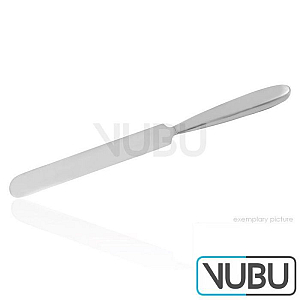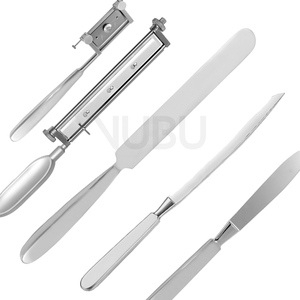


Surgical knives and dermatomes complement conventional scalpels when long incisions, controlled tissue dissection or the removal of a tissue layer of defined thickness is required. VUBU-MEDICAL supplies specialist knives for surgery and pathology, as well as dermatomes and compatible blades for harvesting split-thickness skin grafts.
A choice of blade shapes and working lengths for long incisions or targeted dissection.
Dermatomes are designed to harvest split-thickness skin grafts, with thickness settings that vary by model.
Blade mounting, dimensions and instrument design help you select products that fit your existing equipment.
Sturdy knives with long blades for making even incisions through skin and soft tissue during amputation procedures.
Dissection knives for pathological examination. Brain knives are designed for dissecting delicate structures in neuropathology. Other applications depend on the instrument’s intended purpose.
Specialist knives for harvesting or trimming graft tissue. Depending on the model, they may be suitable for reconstructive or transplant surgery.
Dermatomes are used for controlled harvesting of split-thickness skin grafts. Select the appropriate blade and cutting width for your dermatome model.
Amputation knives for specific soft-tissue cutting tasks. Blade shape and working length depend on the application.
Autopsy knives and brain knives for sectioning and dissecting different types of tissue.
Dermatomes for harvesting split-thickness skin grafts, for example in the treatment of burns, chronic wounds or larger skin defects.
Reusable specialist knives are often made of stainless steel. Check the individual product information for materials and care instructions.
Long cutting edges support continuous incisions. Narrower blades may be suitable for targeted dissection.
Handle shape, balance and a secure blade mount support controlled handling.
Available cutting widths and graft thickness settings vary by dermatome model.
Check the manufacturer, model and blade reference when selecting a blade.
Consult the instructions for use to determine whether a reusable instrument can be autoclaved.
Follow the manufacturer’s instructions for use and your facility’s validated procedures for reusable instruments.
For instruments with replaceable blades, follow the manufacturer’s instructions for disassembly, reprocessing and disposal.
Reprocess reusable components using the procedure specified for the model.
Check cutting edges, handles and blade mounts for visible damage.
Use the method and parameters approved for the model.
Specialist knives are selected for specific cutting or dissection tasks. Dermatomes are designed to harvest a layer of skin of defined thickness.
Amputation knives are designed for long incisions through skin and soft tissue during amputation procedures.
Autopsy knives are used for dissection during post-mortem examinations. Brain knives are designed for dissecting brain tissue.
A split-thickness skin graft includes the epidermis and part of the underlying dermis. It can be used to cover skin defects.
Check the model name and blade reference against the manufacturer’s compatibility information.
Check the available cutting width, the adjustable cutting depth range and the blades specified for the instrument.
This depends on the model and its components. The instructions for use specify the methods approved for reusable parts.
Check the blade labelling for its intended use. Blades labelled as single-use are intended for one use only.
Compare amputation knives, autopsy and brain knives and dermatomes and compatible blades by design, working length and compatibility.


All instruments are certified according to: