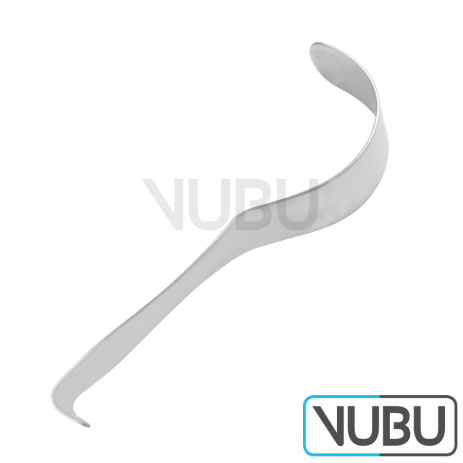


Ultra-Wide Maximum Deep Retractor for Definitive and Broad Control in the Largest Surgical Approaches
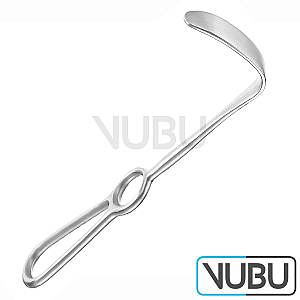
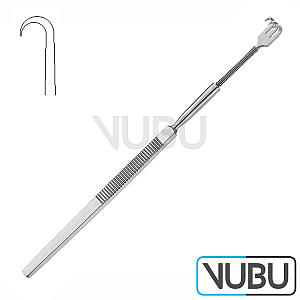
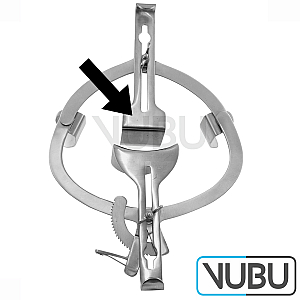
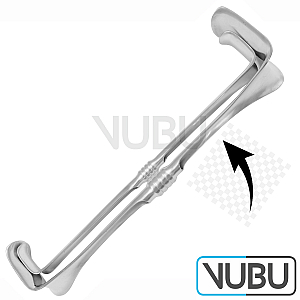
The DEAVER RETRACTOR with the unique standard dimensions of 50 mm width and 30.0 cm length is a CE Class I medical device manufactured according to ISO 13485:2016. This ultra-wide version represents the ultimate synthesis of deep-retracting reach and broad-area holding power. It is designed for the definitive, stable, and controlled exposure of extremely large tissue volumes or organs at maximum depth, as required in the most complex visceral, oncological, or vascular maximum-access procedures.
Product Highlights:
✔ Certified according to ISO 13485:2016
✔ CE marking Class I (Regulation (EU) 2017/745 MDR)
✔ Unique ultra-width (50 mm) for maximum area control in depth
✔ Maximum standard length (30 cm) for unparalleled reach
✔ Characteristically strongly curved, ultra-wide tip for securely encompassing and holding the largest tissue structures
✔ Definitive instrument for situations where conventional retractors (both narrow and wide) fail
✔ Fully rounded, high-gloss polished edges for highest atraumatic quality even with large-area contact
✔ High-quality surgical stainless steel in a special, ultra-stable high-load grade
✔ Extremely long, solid, and ergonomically shaped handle for controlled force transmission
✔ Autoclavable and designed for the most demanding procedures in specialized centers
Benefits of the Deaver Retractor (50 mm, 30 cm):
• Ultimate Combination of Depth and Width: Provides the capability to safely expose and control deep-lying, extensive anatomical areas (e.g., the entire retrohepatic field, the mesenteric root region, or large pelvic tumors) with a single instrument.
• Redefined Retraction Possibilities: Enables surgical approaches and exposures that would not be possible, or only at high risk, with standard narrow Deaver retractors or shorter wide retractors.
• Maximum Efficiency in the Surgical Field: Allows for stable retraction of large organ sections (e.g., right or left liver lobe) by an assistant, providing the surgeon with wide, controlled access.
• Critical Stability Through Width: The extreme width gives the long instrument exceptional bending stability, ensuring secure holding even under high traction load.
• Instrument for Defined Maximum Indications: A specialized tool for selected high-risk procedures in hepato-pancreato-biliary surgery, extensive tumor resection, and revision vascular surgery.
Technical Specifications:
• Model: Deaver Retractor, Ultra-Wide Maximum Version
• Overall Length: 30.0 cm
• Blade Width: 50 mm
• Blade Shape: Ultra-long, with unique width and the characteristic, strong deep curvature at the tip
• Handle Form: Extremely long, solid handle with optimized ergonomics for powerful and precise handling
• Material: High-quality surgical stainless steel (e.g., 1.4301 / 316L in special ultra-high-load quality)
• Surface: High-gloss polished (mirror finish) for minimal tissue resistance
• Special Feature: Unique standard size for ultimate broad-area deep retraction
• Risk Class: I according to Regulation (EU) 2017/745 MDR
Areas of Application (highly specialized):
• Definitive exposure in extremely extended liver resections (trisectionectomies) or large pancreatic tumor resections
• Control of the entire retroperitoneum during complex vascular reconstructions (e.g., aorto-iliac)
• Maximum approaches in upper abdominal revision surgery with massive adhesions
• Selected thoraco-abdominal tumor resections
Critical Safety and Handling Instructions:
• FOR USE BY HIGHLY EXPERIENCED AND SPECIALIZED SURGICAL PERSONNEL IN QUALIFIED MAXIMUM CARE CENTERS ONLY.
• Application requires specific experience in handling ultra-long and ultra-wide instruments.
• Use under strictest aseptic conditions only.
• A critical visual and functional inspection for material fatigue or minimal deformations is MANDATORY BEFORE EACH USE. Do not use the instrument if there is the slightest doubt.
• The combination of maximum length and extreme width generates enormous torque. Any uncontrolled movement carries the risk of catastrophic tissue or organ damage. Force application must be extremely conscious, measured, and tactile.
• Exercise particular caution when placing near vital structures (portal vein, aorta, inferior vena cava, biliary structures).
Write the first Review!


All instruments are certified according to: