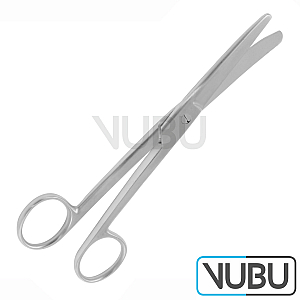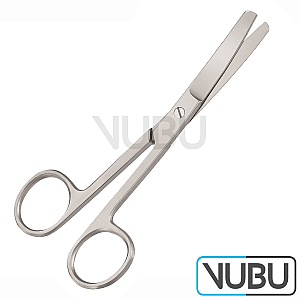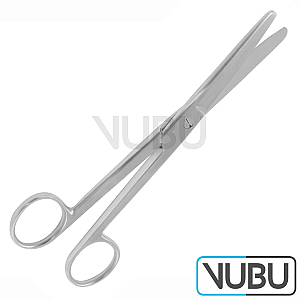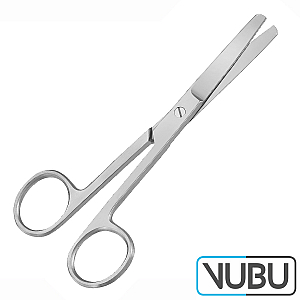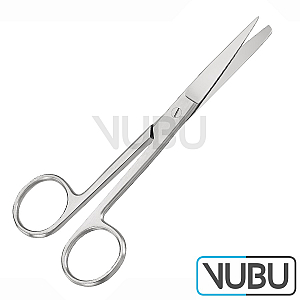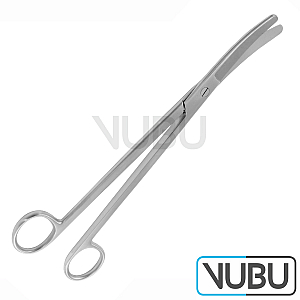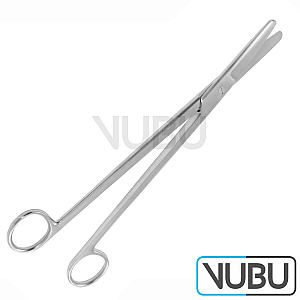


Compare instrument patterns, blade tips and overall lengths for professional use in gynaecology and obstetrics.
VUBU-Medical sources gynaecological scissors from Tuttlingen, an established centre for surgical instrument manufacturing.
See individual product documentation for the origin, material and finish of our surgical instruments.
See the EU Declaration of Conformity for CE marking information and the manufacturer’s documentation for details of its quality management system under DIN EN ISO 13485.
The reviews page includes feedback on instrument quality, cutting performance and delivery.
Doctors, clinics and businesses can order on invoice from VUBU-Medical.
There is no minimum order value. Shipping within Germany is free from €100 in goods value. Check individual product pages for stock and estimated delivery.
The range includes Sims, Doyen, Kelly, Wertheim, Siebold, Cardinale and Dubois scissors. Compare the intended purpose and blade design for the planned procedure.
Depending on the model, options include straight and curved blades with sharp–sharp, sharp–blunt or blunt–blunt tips.
These comments on scissors from the wider VUBU-Medical range are summarised from the shop’s reviews page.
Tanja O. praised the cutting performance and noted a slight delivery delay.
Marta S. praised the sharpness and quality and noted a delivery delay.
Compare established patterns for gynaecology and obstetrics. For the full range of medical scissors , see the main scissors category.
The Sims scissors are available in 20 and 23 cm lengths. Compare straight and curved versions and the sharp–sharp, sharp–blunt and blunt–blunt options listed for each model.
The Doyen abdominal scissors are designed for abdominal wall and fascia work. The range includes straight and curved versions in 16 and 17.5 cm, with tip configurations varying by model.
The Kelly fistula scissors are available in straight and curved versions in 16 and 18 cm lengths.
The Siebold scissors have an S-shaped blade profile and an overall length of 24 cm.
The Cardinale scissors are curved and measure 28 cm overall, offering additional reach.
The Dubois pattern measures 27 cm. Compare the straight and curved versions and consult the model’s intended purpose.
The Wertheim pattern shown here measures 14.5 cm and has curved blades with blunt–blunt tips.
Select scissors by intended purpose, blade geometry and the reach required for the procedure.
For instruments specifically designed for obstetric tasks, see our episiotomy and umbilical cord scissors.
Compare the blade shape, tips and intended purpose of the Sims and Kelly models. For related instruments used for exposure, see our vaginal specula range.
Check the intended purpose of the specific scissors for the planned procedure. Related instruments include hysterectomy and parametrial clamps.
Doyen abdominal scissors are available with different blade shapes and tip configurations. See the intended purpose of the specific model.
Compare blade width, curvature and tip geometry for the planned dissection and access.
See individual product specifications for dimensions, material and intended purpose.
See the product documentation for material and finish details and the instructions for approved reprocessing methods.
Different degrees of curvature provide different working angles. Compare the blade profile with the planned access.
Blade width and edge geometry vary by model. Compare them for the tissue and the intended application.
Options include sharp–sharp, sharp–blunt and blunt–blunt tips. Check the individual model’s specifications.
The models shown range from 14.5 to 28 cm. Compare overall length and blade geometry for the required reach.
For related models with tungsten carbide inserts or Supercut blades, browse our range of tungsten carbide and Supercut scissors.
Compare finger-ring size, handle geometry and joint movement for the intended handling requirements.
Reprocess reusable instruments after use according to the manufacturer’s instructions and your facility’s validated procedures.
Follow the model-specific instructions for the timing and method of pre-cleaning, cleaning and disinfection, including how to position the blades and joint.
Inspect the edges, tips and joint movement as directed in the instructions for use. Remove damaged or faulty instruments from service.
Use the sterilisation method and cycle parameters approved for the specific model. For related packaging and storage options, see our sterilisation containers range.
Follow the manufacturer’s instructions for inspection and care of the joint and cutting edges.
See the instructions for use for reusable surgical instrumentsand follow your facility’s validated procedures.


All instruments are certified according to: