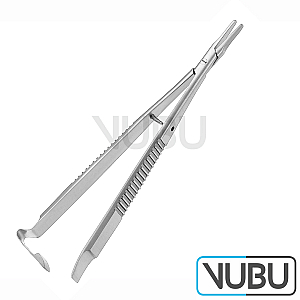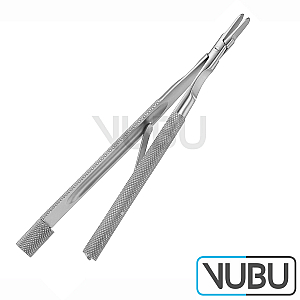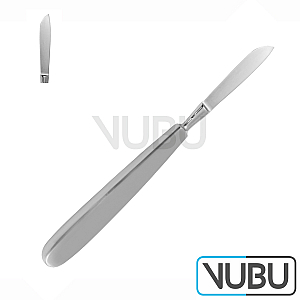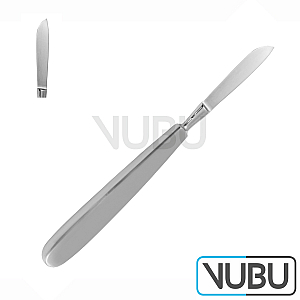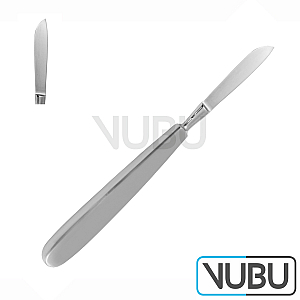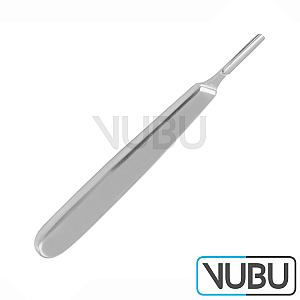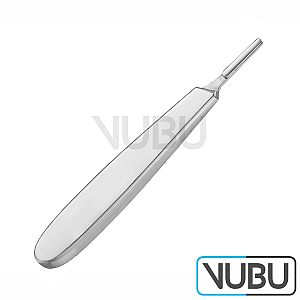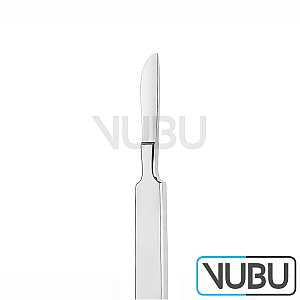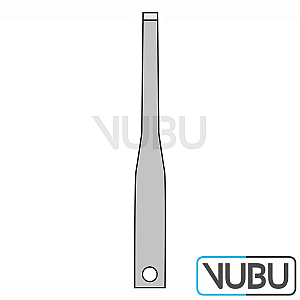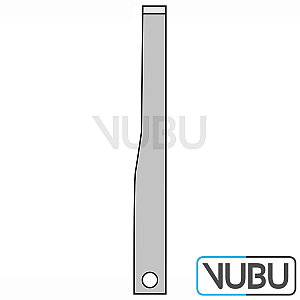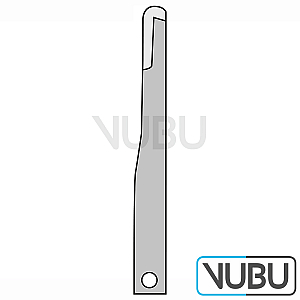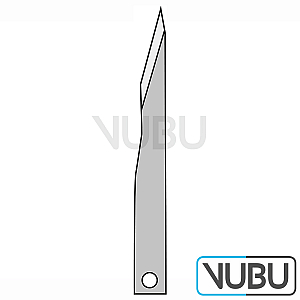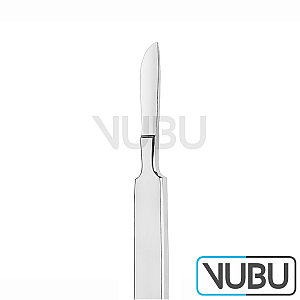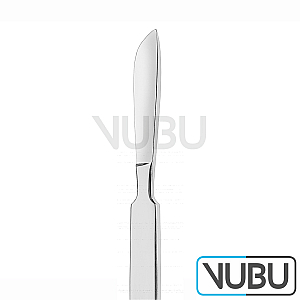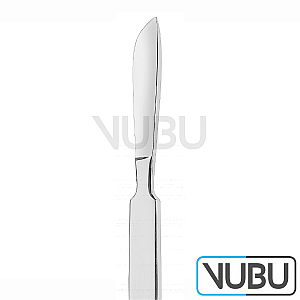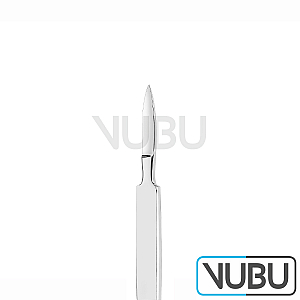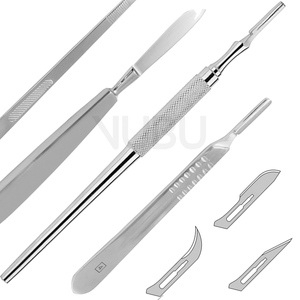


Whether for a skin incision, delicate dissection or a larger surgical approach, scalpels and scalpel blades allow precise, controlled cutting. At VUBU-Medical, hospitals, medical practices and outpatient surgical centres can find surgical scalpels, handles and blades for a wide range of specialties. The key considerations are blade geometry, handle compatibility and safe handling.
Different cutting-edge geometries for long skin incisions, short precision cuts and targeted openings.
Reusable scalpel handles can be combined with compatible sterile single-use blades, in accordance with the manufacturer's instructions.
From general surgery and dermatology to plastic, oral and ENT surgery.
Common handle types No. 3, 4 and 7 accommodate different blade families; always check the actual fit before use.
Handle shape, balance and non-slip surfaces support secure instrument handling.
Explore our surgical scalpels, scalpel handles and blades or our PDF catalogue.
Surgical scalpels are primarily used for precise incisions in skin and soft tissue. Depending on the application, fixed-blade scalpels or systems with replaceable blades are used. A sharp blade of the appropriate shape helps ensure controlled cutting and minimises unnecessary tissue trauma.
Instruments with a permanently attached cutting edge for specific applications. Disposable and reusable versions differ in handling and reprocessing requirements.
A reusable handle is fitted with a compatible blade. Explore our scalpel handles and blades.
Typical systems for smaller blade shapes, such as No. 10, 11, 12 and 15; commonly used in dermatology, plastic surgery and delicate procedures.
For larger blade families, such as No. 20 to 24, including longer skin incisions in general surgery.
Textured handle surfaces and an appropriate handle length help maintain control over cutting angle and depth.
Insert, remove and dispose of blades only with suitable aids and in accordance with occupational safety requirements.
The following product groups and blade shapes provide an overview. For exact suitability and handle compatibility, always refer to the individual product information.
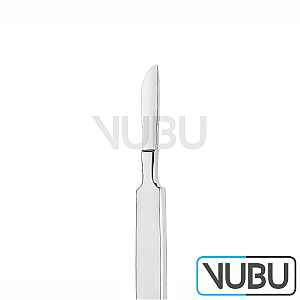
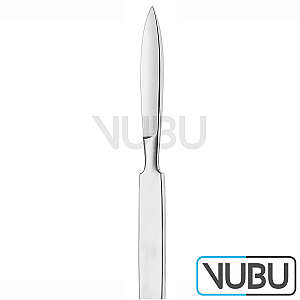
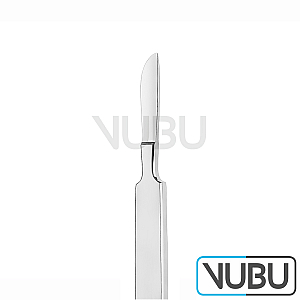
Classic surgical scalpels for precise incisions in hospitals, medical practices and outpatient operating rooms.
Reusable handle systems in various sizes and designs for compatible replaceable blades.
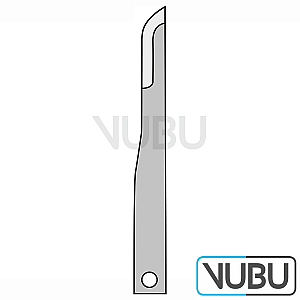
A variety of blade shapes for different incision lengths, tissue structures and surgical approaches.
The classic curved No. 10 blade is suitable for skin incisions. No. 10a is a specialised variation for finer cutting tasks.
A pointed blade for targeted stab incisions, for example when creating small openings or access points.
Hook-shaped and other specialised variants for hard-to-reach areas; exact shape and cutting-edge configuration depend on the manufacturer.
Small curved cutting edges for short, precise incisions, for example in dermatology, plastic surgery and confined surgical fields.
A larger blade shape for specific surgical cutting tasks; check the blade design and handle system before selecting.
Larger blades for longer incisions, including those in general surgery.
Broader or more strongly curved blade shapes for larger surgical incisions.
Specialised larger blade shapes; exact cutting characteristics and availability vary by manufacturer.
Tools for controlled removal of used blades. The blades must then be discarded in suitable puncture-resistant, break-resistant sharps containers.
The right blade depends not only on the specialty but also on incision length, tissue type and accessibility.
Larger blade shapes, such as No. 20 to 24, for longer skin incisions; smaller shapes for targeted dissection steps.
Small blades, such as No. 15, for precise skin incisions, excisions and procedures in limited operating fields.
Fine blade shapes for controlled incision lines and precise approaches to delicate soft tissue.
Pointed and fine blades for selected small incisions; instrument choice and technique depend on the procedure.
Special curved or hook-shaped blades for anatomically difficult-to-access areas.
Scalpels for skin incisions and selected surgical approaches within the respective specialty.
Robust, appropriately shaped blades for skin incisions and surgical access.
Suitable handle-and-blade combinations for targeted incisions, drainage access and outpatient procedures.
When choosing an instrument, sharpness is only one consideration: material, handle fit, packaging and intended use are equally important.
Blade geometry affects the initial cut, incision control and performance in different tissue structures.
Reusable scalpel handles are often made from corrosion-resistant stainless steel; blade materials vary by product.
Handles No. 3/7 and No. 4 typically use different blade families. The specific manufacturer's instructions are decisive.
Where specified on the product, sterile individual packaging supports hygienic use; single-use devices must not be reprocessed.
Handle design and surface texture support controlled work, including during longer procedures.
Curved, pointed and hook-shaped versions for different incision techniques.
Suitable blade removers and puncture-resistant disposal containers reduce the risk of injury when handling used blades.
Reusable handles must be reprocessed only using validated procedures and the relevant manufacturer's instructions.
Safety when handling sharp instruments comes first. These are general guidelines; the applicable instructions for use, occupational safety regulations and your facility's validated processes take precedence.
Safely remove used disposable blades from the handle without touching the cutting edge directly. Use appropriate removal tools.
Immediately discard single-use blades in approved puncture-resistant sharps containers; do not collect them loose or reuse them.
Clean and disinfect reusable handles after use according to the instructions for use, paying particular attention to the blade mounting area and surfaces.
Inspect handles for corrosion, damage and secure blade attachment. Remove defective instruments from service.
Use only sterilisation methods and parameters approved by the manufacturer. Do not resterilise single-use blades.
Store reprocessed handles appropriately. Fit new sterile blades only as part of the intended workflow, using suitable tools.
These handle systems typically accept smaller blades, such as No. 10, 11, 12 and 15. Always check the compatibility expressly specified by the manufacturer.
Handle No. 4 is generally designed for larger blade families, such as No. 20 to 24. Actual compatibility depends on the product.
The curved No. 10 blade is commonly used for standard skin incisions.
No. 11 has a pronounced point for targeted stab incisions. No. 15 has a small curved cutting edge for short, controlled incisions.
Smaller blade shapes, such as No. 15 or 15c, are suitable for many fine cutting tasks. The choice depends on the procedure and preferred technique.
No. Blades labelled as single-use devices are intended exclusively for their specified one-time use.
Use suitable blade removers or other appropriate tools, without directly touching the cutting edge. Then discard the blade in a suitable puncture-resistant container.
You can open the Surgical Scalpels, Knives and Dermatomes PDF catalogue on VUBU-Medical.
In addition to surgical scalpels and scalpel handles and blades you can also explore surgical scissors, medical forceps and other surgical instruments.
View PDF Catalogue: Surgical Scalpels, Knives and Dermatomes


All instruments are certified according to: