All instruments are reusable and certified according to:


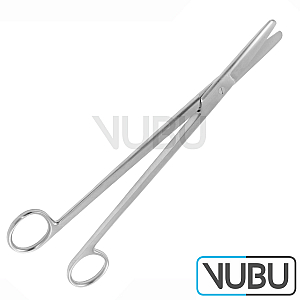
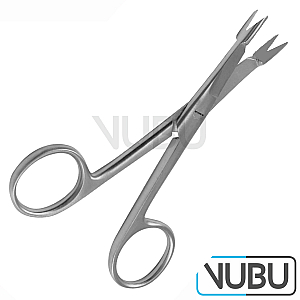
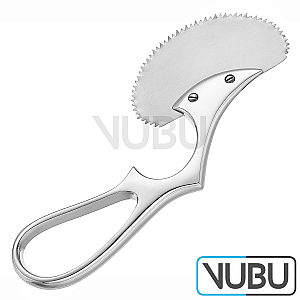
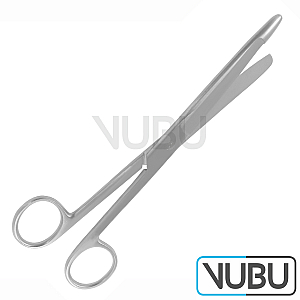
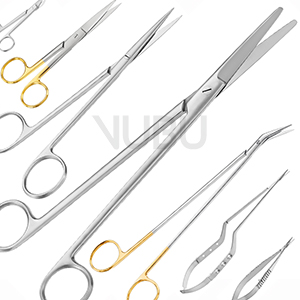
At VUBU, you can buy surgical scissors of certified OR quality online. Our range includes a large selection of surgical scissors for all surgical specialties – from fine dissecting scissors to robust bandage and tissue scissors. All surgical scissors are made from high-quality, rust-free stainless steel, CE-certified, and designed for permanent use in the OR as well as repeated sterilization.
Surgical scissors, as biomechanical precision tools, represent the interface between surgical intention and tissue manipulation. Their evolution ranges from simple cutting instruments to today's micromechanical systems with specialized blade profiles for a wide variety of tissue types. Modern scissor designs are based on materials science principles that enable optimal force transmission while simultaneously protecting tissue. Choosing the right instrument directly influences cut quality and postoperative healing outcomes.
This instrument group, represented by the iconic Metzenbaum scissors, is characterized by elongated blades with special cutting geometries. The blade length (typically 90-150mm) enables deep access with minimal tissue trauma. Our portfolio includes:
The high-end combination of tungsten carbide and Supercut in our Mayo and Metzenbaum scissors reduces cutting forces by 40% and enables precise dissection even in fibrotic tissue.
Characteristic are the variable blade configurations, optimized for specific cutting requirements:
Our curved variants (25-45° curvature) enable anatomical work in hard-to-reach areas with up to 30° improved visibility.
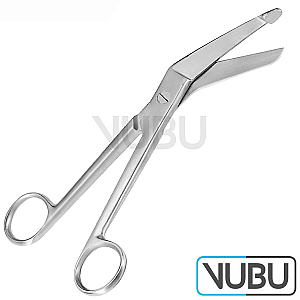
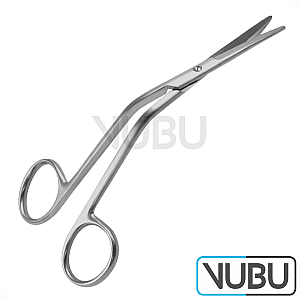
Special constructions with angled blades (15-30°) and titanium nitride-coated edges for material-intensive applications. The enlarged finger rings (Ø18-22mm) reduce hand strain during repetitive cuts by up to 45%.
Our range of surgical scissors combines traditional craftsmanship with state-of-the-art manufacturing technology. Each instrument is made from martensitic stainless steel 1.4112 (HRC 48-52) and undergoes a 15-step quality control process focusing on:
The cryogenic treatment at -196°C increases micro-hardness by 15% and improves fatigue strength.
Eye and Iris Scissors: Micro-instruments with 6-10mm blade length and 0.3mm tip thickness for ophthalmological precision. Special anti-reflective coating reduces light scatter during microscope use.
Intestinal-Lung-Cartilage Scissors: Atraumatic designs with rounded tip ends for visceral procedures. Special groove structure prevents tissue pinching during the cut.
Crown and Wire Scissors: Reinforced construction with 800HV tungsten carbide inserts for orthodontic wires up to 1.2mm thick. Torque-optimized handles for power-saving work.
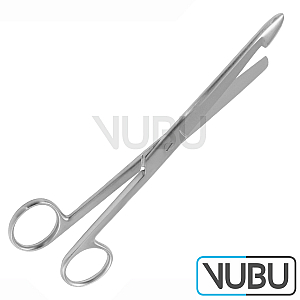
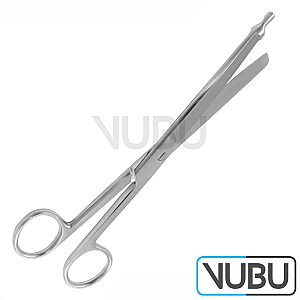
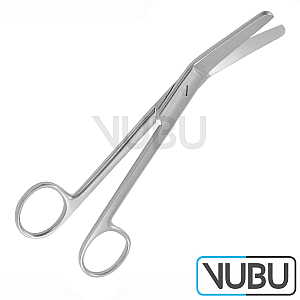
Episiotomy and Umbilical Cord Scissors: Obstetric specialists with safety caps and 30° angulation for anatomical work. Antibacterial silver-ion coating reduces infection risks.
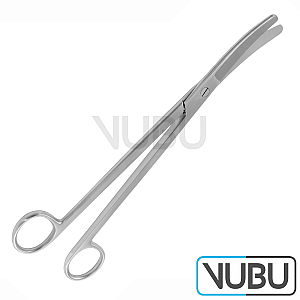
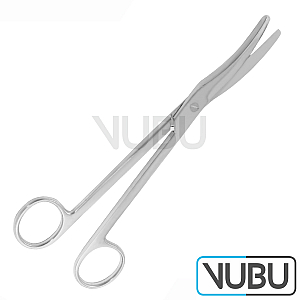
Gynecological Scissors: Length-varied versions (18-25cm) with extra-slim shanks for deep pelvic procedures. Fenestrated blades reduce tissue adhesion.
Iridectomy Scissors: Micro-precision instruments with 0.5mm tip diameter and integrated angle scale for glaucoma surgery procedures.
Ligature Scissors: Special constructions with concave inner blade surface for safely cutting ligatures without vascular injury. Used particularly in vascular surgery.
Nail and Skin Scissors: Short-bodied scissors with convex-concave edges for precise debridement. Used particularly in podiatric and dermatological surgery.
Tendon and Corneal Scissors: Differentiated designs with 45° angulation for orthopedic tendon revisions and keratoplasty procedures. Micro-serrated blades for slip-free cutting.
Tonsil Scissors: Force-optimized instruments with 120° spreading angle and reinforced joints for fiber-rich lymphatic tissue. Reduced cutting force by 35% compared to standard models.
Gum Scissors: Micro-invasive designs with sapphire coating for gingival procedures. Corrosion-resistant to disinfectants and saliva.
Scissors with Tungsten Carbide (TC): High-performance variants with wear-resistant tungsten carbide edges (1500-1800 HV). Guaranteed edge retention for >500 sterilization cycles.
Our scissor series integrate advanced technologies for improved surgical outcomes:
Clinical studies prove 28% faster wound healing due to reduced tissue trauma and 45% less need for re-sharpening in daily OR practice.
Precision scissors are more than cutting tools - they are kinetic translators of surgical intention. Our instruments transmit minimal hand movements with 1:1 precision through optimized leverage ratios (1:1.8 to 1:2.5) and reduce fatigue during long procedures. The materials science optimization (modulus of elasticity 210 GPa) enables fine tactile feedback for differentiated tissue cutting. These quality features lead to demonstrable advantages:
Our technical catalog offers detailed application notes and materials science specifications. Our instrument medical advisory team supports you with specialty-specific selection.
Surgical scissors are robust and versatile instruments used in nearly all medical fields. They are primarily designed for cutting tissue but are also used for cutting surgical aids such as drainage tubes, dressing materials, and sutures. Due to their universal applicability, surgical scissors are indispensable tools in operating rooms, outpatient clinics, hospital wards, and medical practices.
Surgical standard scissors are available in two basic forms:
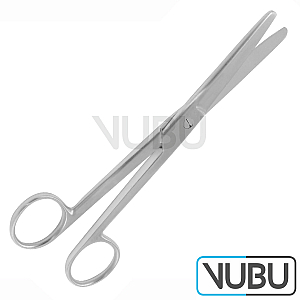
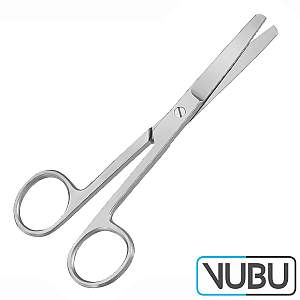
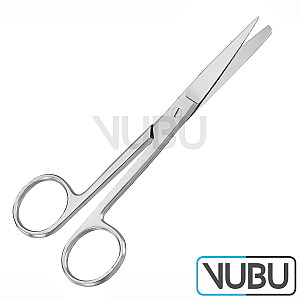
Straight scissors: Ideal for superficial cuts and cutting materials.
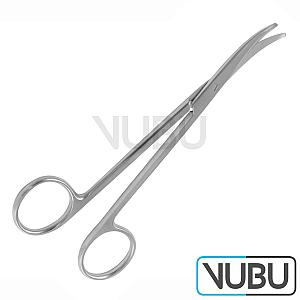
Curved scissors: Also known as slightly curved scissors, they provide better visibility and access to deeper tissue layers.
The blade tips of these scissors vary depending on the model and application. A special variant of curved scissors is the Cooper scissors, named after the English surgeon Astley Paston Cooper. These scissors feature curved blades and a blunt tip, making them particularly suitable for dissecting fine, thin tissue. They are often used in microsurgery and for precise tissue dissection.
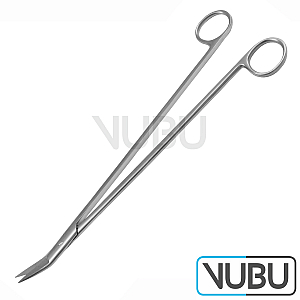
The Metzenbaum scissors, named after the American surgeon Myron F. Metzenbaum, are specialized scissors with a long handle and relatively short blades. This design allows for cutting in deep body regions without the surgeon being hindered by overly wide-open scissor blades. The Metzenbaum scissors are particularly suitable for dissecting delicate tissue and are frequently used in visceral surgery, vascular surgery, and plastic surgery.
The Mayo scissors are robust scissors with outward-facing blades. They are specifically designed for cutting thick and resistant tissue such as fascia, tendons, or ligaments. Due to their stability and sharpness, they are a preferred instrument in general surgery and orthopedic surgery. Mayo scissors are available in both straight and curved versions to meet different requirements.
Surgical scissors are used in a wide range of medical disciplines, including:
Vascular surgery: For cutting vascular tissue.
Neurosurgery: For precise cuts in sensitive nerve tissue.
Gynecology: For procedures such as episiotomy (perineal incision).
Traumatology: For cutting tissue and materials in emergency situations.
Dermatology: For removing skin lesions or preparing skin grafts.
Surgical scissors are made from high-quality medical-grade stainless steel, which is corrosion-resistant, sterilizable, and durable. Some models feature tungsten carbide coatings or titanium coatings to further enhance sharpness and durability. Ergonomic handles ensure comfortable handling and reduce surgeon fatigue during lengthy procedures.
Surgical scissors are indispensable tools in modern medicine. Whether as a standard scissor for universal applications, a Metzenbaum scissor for precise dissections, or a Mayo scissor for robust cuts – each scissor is tailored to specific requirements. With their high quality, precision, and versatility, they play a crucial role in the success of surgical procedures.
For business customers we additionally offer the payment on account.
All instruments are certified according to: