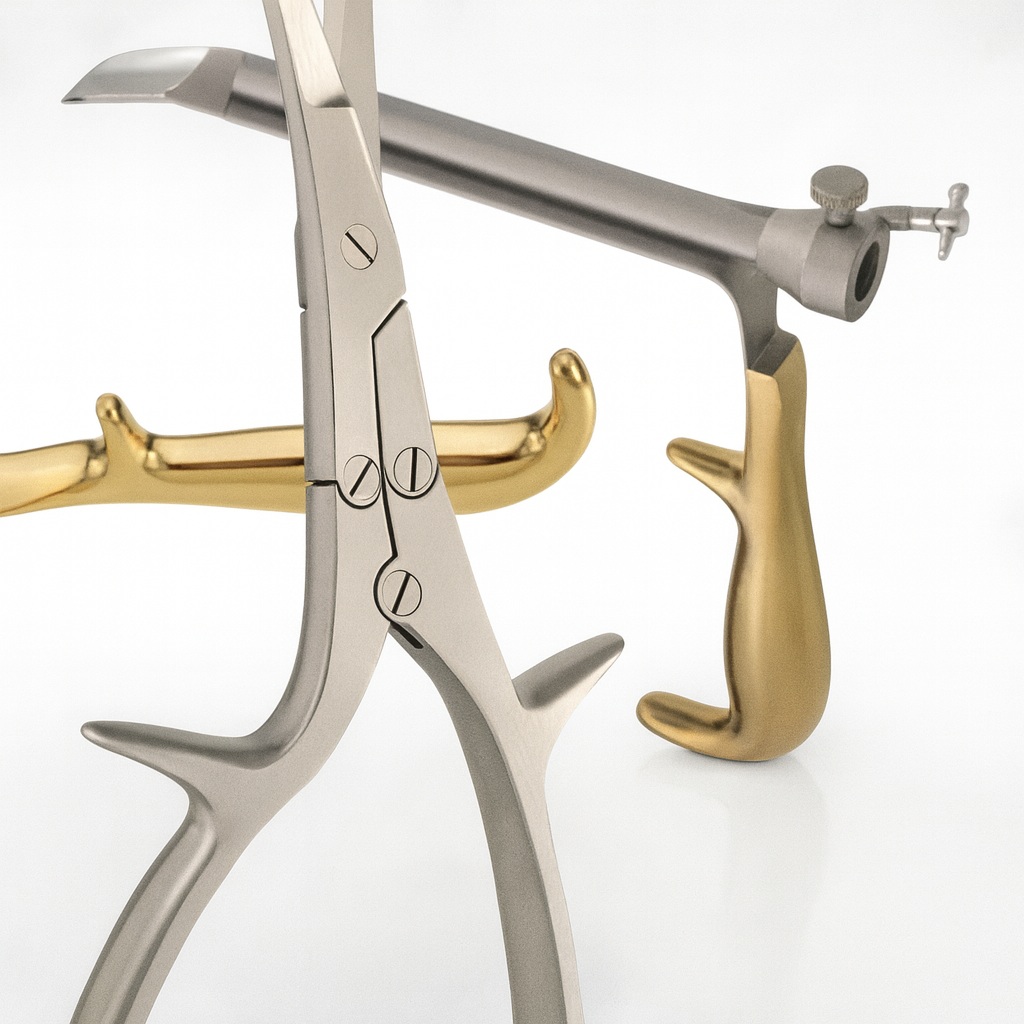


Plastic surgery offers the possibility of performing aesthetic and cosmetic procedures on the most visible parts of the body. VUBU-MEDICAL specifically offers specialized plastic surgery instruments for cosmetic clinics.
VUBU-MEDICAL specializes in surgical instruments for liposuction, breast augmentation, abdominoplasty, breast reduction, facelift, rhinoplasty, and eyelid, mouth, and chin correction. We support cosmetic clinics and plastic surgeons with a wide selection of over 500 plastic surgery instruments for this field.
Our entire portfolio is also available as an online PDF catalog for download here:
Our focus is particularly on plastic surgery instruments for aesthetic and reconstructive surgery. We work closely with renowned plastic surgeons and continuously improve our products to always offer you instruments of the highest quality. You only buy professional plastic surgery instruments from us, manufactured according to the highest quality standards DIN ISO EN 13495:2016. Of course, in conjunction with our sterile containers, we can also assemble ready-made surgical trays for plastic surgery according to your specifications. Simply contact us directly for advice via our service hotline: +49 7462 944486 or by email: info@vubu-medical.de .
Breast dissectors are considered atraumatic instruments and are used in breast augmentation. Due to the particularly rounded design of our breast dissectors, no tissue is damaged and bleeding is minimal. The implant can therefore be inserted and positioned immediately during the preparation. There is no risk to the patient of the implant being damaged by the breast dissector. A breast elevator is another type of dissector, but it lifts the internal breast tissue during preparation by the cosmetic surgeon. Spatula-shaped breast elevators are particularly well-suited for this purpose.
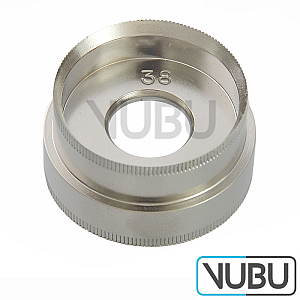
Areola markers are used in breast augmentation and reduction procedures. Before the actual surgery, the cosmetic surgeon places an areola marker on the nipple to mark the natural center of the breast. This helps to center the implant during the subsequent operation. Numerous other instruments, such as Castroviejo calipers and Jameson calipers, assist the surgeon in aligning both breasts equally, both horizontally and vertically. To achieve an excellent overall result, the cosmetic surgeon uses these previously established markings as a guide.
Breast spatulas and tongue depressors are helpful plastic surgery instruments used in breast augmentation. The semi-rigid breast spatulas are slightly flexible and allow for lifting of the breast tissue. Tongue depressors, on the other hand, depending on the model, have a fiber optic cable and a suction tube. This allows the plastic surgeon to see beneath the lifted breast tissue and simultaneously aspirate blood.
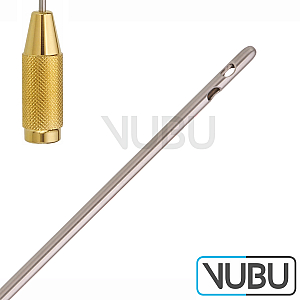
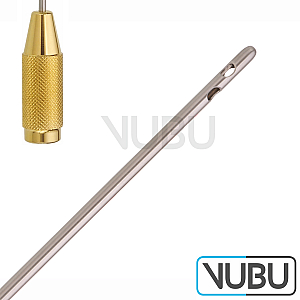
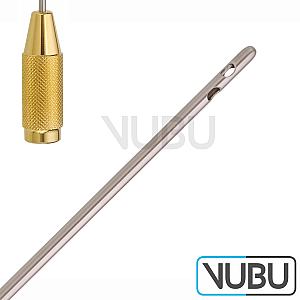
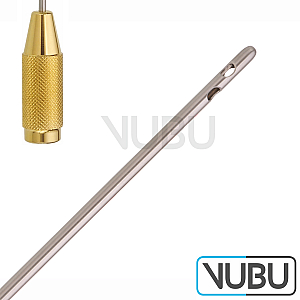
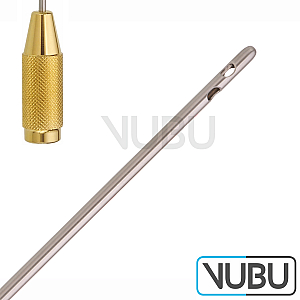
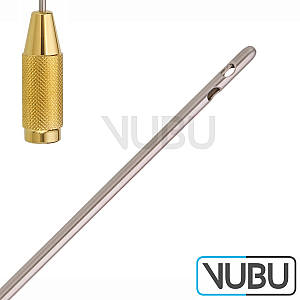
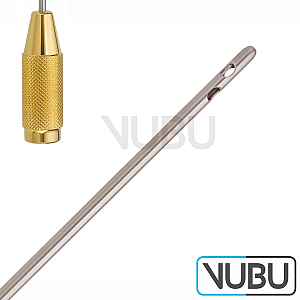
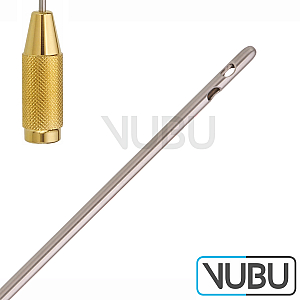
Liposuction cannulas are used in cosmetic surgery for fat removal. Longer cannulas are preferred for the abdomen and hips, while shorter, narrower ones are ideal for the face and limbs. Connected to a suction pump, the cannula creates continuous suction, drawing the fat and fluid through the cannula and into a collection container via a tube. The advantage of this liposuction method is its precision and ability to minimize tissue damage.
Nose hooks are used specifically in reconstructive rhinology. These hooks have a light guide, allowing the cosmetic surgeon to see inside the nose during dissection. Various auxiliary instruments, such as thumb retractors, further assist the surgeon in maintaining an overview of instruments and swabs. Bear claws, on the other hand, are sharp retractors that can grasp and stretch larger flaps of skin, such as the scalp.
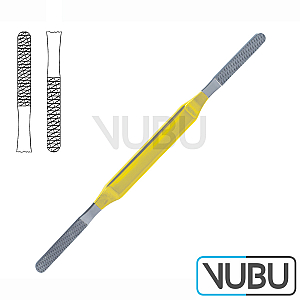
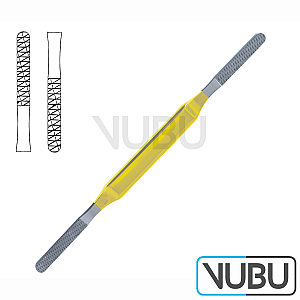
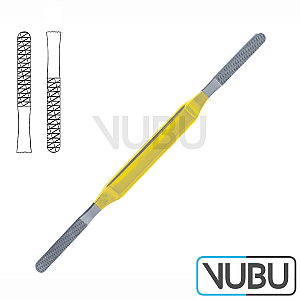
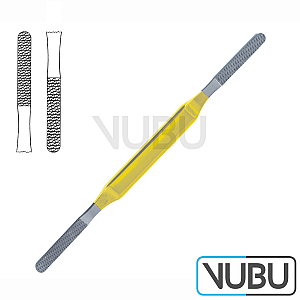
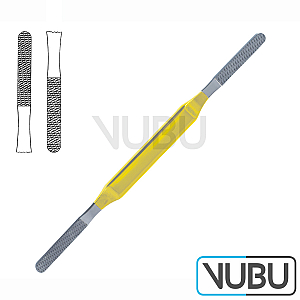
Nose rasps and nose chisels are used to shape the nasal bone. With a nose chisel, the cosmetic surgeon can remove larger protrusions of the nasal bone. With a nose rasp, on the other hand, they grind the bone into the desired aesthetic shape. There are five different rasp sizes available, ranging from fine to coarse.
Rhytidectomy scissors are specialized scissors used in cosmetic surgery for wrinkle removal in the neck and face area. Excess fat can be removed using a scalpel-like blade. All rhytidectomy scissors feature a carbide insert in the cutting edge. This guarantees exceptional precision, sharpness, and durability. You can find more scissors under general surgical instruments in the scissors category .
Style retractors, based on the Tebbetts and Ferriera designs , are mammoplastic instruments used in breast surgery, particularly breast augmentation. Style retractors feature a cold fiber optic cable for connection to a light source and optionally a suction tube with a hose connection. The fiber optic cable is compatible with Storz, Wolf, and Olympus retractors via our adapter, which connects to their fiber optic cable. Tebbetts retractors have a serrated jaw to anchor them in the tissue. Ferriera retractors have a smooth jaw.
Wound retractors and retractors are used to pull particularly large skin flaps apart or together. Wound retractors according to Freeman or Gorney are ideally suited for plastic surgery, specifically for abdominoplasty and facial tightening.
The Daniel or Ramirez endo-dissector is a state-of-the-art instrument for minimally invasive procedures in plastic and aesthetic surgery. Its refined, ergonomic design enables millimeter-precise, tissue-sparing dissection during facelifts, breast augmentations, or reconstructive procedures.
Your advantages:
Minimal tissue trauma for faster healing
Highest precision in tissue separation and mobilization
Ergonomic design for optimal control and fatigue-free work
Versatile use in aesthetic and reconstructive surgery
Extraoral and intraoral retractors are fundamental instruments in modern oral and maxillofacial surgery. They ensure the necessary stabilization and exposure of the surgical area in the face, jaw, and mouth, thus enabling procedures that restore function, health, and aesthetics.
Key advantages of our retractors:
Optimal overview: Ensures a clear view and precise access to the operating field.
Tissue protection: Enables gentle tissue handling and minimizes trauma.
Ergonomic design: Reduces surgeon fatigue and improves control during long procedures.
Robust construction: Made from high-quality materials for durability and reliability.
Main areas of application:
Jaw correction and fracture treatments
Facial reconstruction after trauma or tumor resection
Implantology and bone augmentation
Soft tissue surgery in the lip, cheek and oral cavity area
A nasal speculum is an indispensable instrument in rhinology, used to spread the nostrils and create optimal access to the nasal cavity. By gently widening the nostrils, it allows for improved visualization of the nasal structures, which is crucial for both diagnostic examinations and surgical procedures. Its use makes it easier for the surgeon to work precisely while minimizing the risk of tissue trauma.
Our product range includes high-quality nasal specula based on the proven designs of Cottle and Killian . These models have been specially developed for the requirements of modern rhinology and are characterized by their ergonomic shape and reliable functionality.
Cottle speculum: These specula are particularly versatile and ideally suited for controlled and gentle widening of the nasal alae. They provide a broad view of the nasal cavity and are therefore extremely useful in both diagnostics and surgical procedures.
Killian speculum: Known for its robust construction, this speculum offers stable and reliable spreading of the nasal alae. It is particularly advantageous in complex procedures requiring sustained and precise access.
Both designs are made from high-quality materials that ensure easy cleaning and sterilization to meet the highest hygiene standards. Their ergonomic design also provides comfortable handling, which facilitates the surgeon's work and increases the efficiency of the procedure.


Alle Instrumente sind zertifiziert nach: